

Build It Safe: Understanding Traffic Signs for Construction Sites
Your Guide to Construction Site Safety and Traffic Management
Traffic signs for construction sites are essential safety tools that warn of hazards, guide traffic flow, and protect workers and the public in active work zones. They fall into three main categories:
- Warning Signs: Alert drivers to upcoming hazards (e.g., Road Work Ahead, Lane Closed, Men at Work)
- Regulatory Signs: Enforce rules and restrictions (e.g., Temporary Speed Limit, No Entry, Stop/Slow)
- Guide and Information Signs: Direct traffic and provide instructions (e.g., Detour, End Roadwork, Site Office)
All construction traffic signs must be highly visible, durable, and comply with Australian standards to effectively manage temporary traffic conditions.
Construction zones are dynamic environments where heavy machinery, workers on foot, and public traffic converge. Without clear, strategically placed signage, the risk of accidents, confusion, and project delays increases dramatically. Traffic signs for a construction site serve as the first line of defence, providing constant visual reminders of changing conditions, speed limits, and required actions. They guide drivers safely through or around work areas, protect vulnerable workers, and help maintain traffic flow even when normal road conditions are disrupted. For site managers and supervisors, understanding which signs to use, where to place them, and how to ensure they meet compliance standards is not just a regulatory box to tick, it's a practical necessity that directly impacts the safety and efficiency of every project.
At Pinnacle Signage, we manufacture durable, compliant signage designed to meet the demanding conditions of Australian construction sites. Our focus is on providing the tools your team needs to communicate hazards clearly and effectively, helping to prevent incidents and keep projects running smoothly.
The Critical Role of Signage in Work Zone Safety
On any construction site, safety is paramount. Traffic signs for construction site are not merely decorative; they are crucial components in a comprehensive safety strategy, acting as silent guardians for everyone involved. They serve multiple primary purposes, all aimed at preventing accidents and ensuring smooth operations. Road construction signs are a highly visible and effective way to warn employees, pedestrians, and visitors of the potential dangers that construction areas pose.
These signs contribute significantly to overall safety by:
- Protecting Workers: Alerting drivers to the presence of personnel, heavy machinery, and changing conditions allows workers to operate with a greater sense of security. The signs warn of nearby construction workers, reminding everyone to proceed with caution. Extra vigilance is key in these areas to ensure the safety of both workers and passersby.
- Safeguarding Pedestrians: Guiding pedestrians safely around hazardous areas or through designated detours prevents them from wandering into dangerous zones.
- Informing Drivers: Providing clear, timely information about changes in traffic flow, speed limits, or road closures helps drivers react appropriately, reducing the risk of collisions and ensuring a smooth traffic flow. These signals indicate a temporary change in the speed limit for the area's safety. Remember to adjust your speed to steer the zone safely, protecting workers and yourself.
- Preventing Accidents: By highlighting potential hazards and mandating safe practices, signs drastically reduce the likelihood of incidents.
- Reducing Congestion: Clear directions and warnings help maintain an orderly flow of traffic, even when lanes are closed or detours are in place, thus avoiding traffic congestion during construction.
- Ensuring Legal Compliance: Adhering to Australian Workplace Health and Safety (WHS) regulations for signage is a legal requirement, protecting your project from fines and legal repercussions.
- Facilitating Clear Communication: Signs provide instant, universal communication about site rules and conditions, especially valuable for a diverse workforce or transient public.
- Offering Constant Visual Reminders: Even with safety briefings and training, a well-placed sign serves as a continuous, reinforcing visual reminder of site rules and potential dangers.
Our range of road construction traffic signs are designed to address these critical needs, providing essential hazard warnings and instructions that protect everyone on and around your site.
Why Signs are Non-Negotiable
In the dynamic environment of a construction site, there's simply no substitute for clear, effective signage. They are a non-negotiable element of any project for several reasons:
- Protecting Vulnerable Road Users: This includes not just drivers, but also cyclists and pedestrians who may not be familiar with the site's layout or hazards. Signs guide them safely away from danger.
- Guiding Traffic Efficiently: Signs help to manage the flow of vehicles, preventing confusion and potential bottlenecks. Without them, even minor disruptions can escalate into major traffic problems.
- Minimising Project Delays: Accidents and traffic snarls can lead to significant delays and cost blowouts. Proper signage helps to keep things moving safely and on schedule.
- Reinforcing Safety Training: While training is crucial, it's the consistent visual presence of signs that reinforces learned behaviours and keeps safety top-of-mind. Hazard safety signs serve as constant visual reminders, reinforcing site rules and protecting workers.
- Communicating Site Rules: From mandatory personal protective equipment (PPE) zones to restricted access areas, signs clearly outline the rules for everyone entering the site.
- Managing Risks: Construction sites are inherently high-risk environments. Signs are a fundamental tool in identifying and mitigating these risks, from falling objects to heavy machinery movement.
Effective signage is more than just a 'tick-the-box' solution; it's a practical tool that can save lives and ensure your project's success. For a deeper dive into the importance of these visual cues, explore our guide on Everything You Need to Know About Construction Warning Signs.
Decoding the Signs: Categories and Common Examples
Understanding the different categories of traffic signs for construction site is key to their effective use. In Australia, these signs generally fall into three primary categories: Warning, Regulatory, and Guide/Information signs. Each category has distinct characteristics in terms of colour, shape, and purpose, making them instantly recognisable to road users. By understanding these distinctions, we can ensure that every message is conveyed clearly and without ambiguity. For a comprehensive overview of road and safety signs, refer to our Beginners Guide to Road and Safety Signs.
Warning Signs: The First Alert
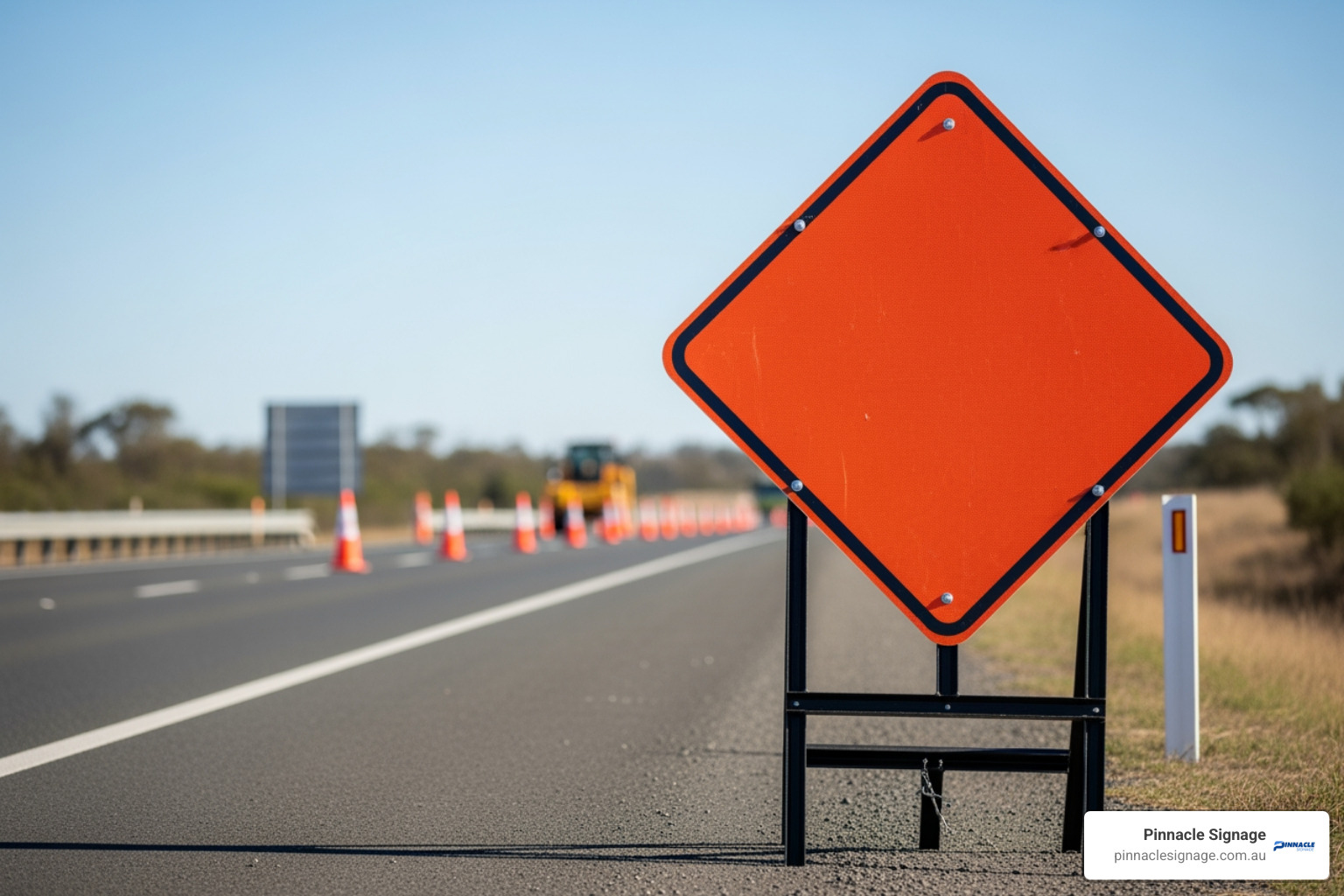
Warning signs are designed to alert drivers to potential hazards or unusual conditions ahead, giving them time to react safely. They typically feature black symbols or text on an orange background, often in a diamond shape.
Here are some common examples of warning signs you'll see on an Australian construction site:
These signs are your first line of defence in hazard communication. For more details on road hazard signs, check out our guide on Road Hazard Signs Explained Know Before You Go.
Regulatory Signs: The Rules of the Road
Regulatory signs enforce specific traffic laws or instructions that must be obeyed within the construction zone. These signs are typically rectangular with a black legend on a white background, though temporary regulatory signs in construction zones often use black text on an orange background to signify their temporary nature.
Here are essential regulatory signs in work zones:

Understanding and obeying these signs is critical for both safety and legal compliance. For more on prohibitive signs, read Stop Look Listen Understanding Prohibitive Road Signs.
Guide and Information Signs: Showing the Way
Guide and information signs provide direction, indicate services, or offer general information to help road users steer through or around the construction site. They are typically rectangular, with black text on an orange background for temporary construction-related information.
Common guide and information signs include:
- Detour: These signs guide you along a safe, alternative path that bypasses the work area. Following the detour keeps your walk smooth and hazard-free, ensuring you stay clear of any construction activity. For specific guidance on these, refer to Understanding Detour Signs.
- End Roadwork: Seeing an "End Roadwork" sign means you've officially reached the finish line, leaving the cones, flares, and reduced speeds behind. Normal road conditions have returned.
- Site Office: "Site Office" signs point the way for deliveries, inspectors, and other authorised personnel. These signs typically mark a temporary building that serves as the administrative hub for the project.
- Pedestrian Detour: Specifically directs pedestrians to a safe alternative route, keeping them away from active work areas.
These signs are vital for maintaining order and preventing confusion, helping everyone steer the temporary landscape of a construction site. Our comprehensive range of Your Comprehensive Guide to Site Safety Signs offers further insights into managing your site's information flow.
Key Characteristics of Effective Traffic Signs for Construction Site
Effective traffic signs for construction site share several key characteristics that ensure they are seen, understood, and obeyed. These features are not arbitrary; they are carefully designed to maximise impact and safety, especially under challenging construction site conditions. These include high visibility, durability, clarity, and strategic placement, all adhering to relevant Australian standards. To ensure your messages endure, explore our solutions for Weatherproof Your Message Top Solutions for Durable Signage.
Colour and Shape
The colour and shape of a sign are its first cues, conveying meaning even before the text or symbol is fully processed.
- Orange Background: For temporary traffic control in construction zones, orange is the universal colour. This bright, vibrant hue immediately signals caution and temporary conditions, standing out against most backgrounds. Road construction signs are typically bright orange for high visibility.
- Diamond Shape for Warnings: Most warning signs, like 'Road Work Ahead' or 'Men at Work', are diamond-shaped. This distinctive shape immediately tells drivers to be alert for upcoming hazards.
- Rectangular for Regulatory and Guide: Regulatory signs (e.g., 'Temporary Speed Limit') and guide signs (e.g., 'Detour') are typically rectangular.
- Black Symbols and Text: To ensure maximum contrast and readability against the orange background, all symbols and text on construction traffic signs are black.
Understanding the difference between caution, danger, and warning signs is also crucial for effective communication. Learn more in Caution vs Danger vs Warning What's the Difference.
Reflectivity and Visibility
Visibility is paramount for traffic signs for construction site, particularly during low-light conditions, at dusk, dawn, or throughout the night.
- Night-time Visibility: Signs must be clearly legible 24 hours a day.
- Retro-reflectivity Standards: We ensure our signs meet high retro-reflectivity standards. This property allows light from vehicle headlights to be reflected directly back to the driver, making the sign appear illuminated.
- Fluorescent Orange: The use of fluorescent orange sheeting further improves daytime visibility, especially in overcast or foggy conditions.
Combining these elements ensures that our signs are seen and understood in all conditions, providing continuous protection. For installation guidance, refer to Mounting Mastery Your Guide to Installing Signs.
Strategic Placement
Even the most compliant and durable sign is ineffective if it's not placed correctly. Strategic placement is a critical characteristic of effective traffic signs for construction site.
- Advance Warning Area: Signs must be placed an adequate distance before the work zone to give drivers enough time to react safely. This "advance warning area" varies based on road speed and type.
- Sign Spacing Based on Speed: On higher-speed roads, signs need to be spaced further apart to account for longer reaction times. In urban areas with lower speeds, spacing can be closer.
- Avoiding Obstructions: Signs must be free from visual obstructions like trees, other signs, or parked vehicles. Their message must be clear and unobstructed from a driver's perspective.
- Routine Inspections: Regular inspections are essential to ensure signs remain in their correct positions, are not damaged or faded, and continue to provide clear guidance. Signs should be placed in high-risk areas where they are clearly visible.
For broader guidance on effective workplace signage, consult How to Use Health and Safety Signs in the Workplace Effectively.
Meeting Site Requirements and Best Practices
Navigating the regulatory landscape for traffic signs for construction site is a critical aspect of responsible project management. Adherence to Workplace Health and Safety (WHS) regulations and specific state road authority guidelines is not just about avoiding penalties; it's fundamental to protecting lives and ensuring your project runs smoothly. Failure to comply with Australian WHS regulations for safety signs can lead to fines, increased injury risk, and project delays.
Key Australian Guidelines
In Australia, specific regulations and standards govern the use of construction traffic signs, primarily focused on ensuring safety and consistency.
- Workplace Health and Safety (WHS): All construction sites must comply with WHS legislation, which mandates the use of appropriate signage to manage risks. Workplace safety signage plays a key role in preventing accidents and ensuring compliance with Australian workplace health and safety (WHS) regulations. Under Australian workplace safety laws, all hazard safety signs must meet legal standards.
- Temporary vs. Permanent Signs: It's important to distinguish between temporary signs used for construction (which typically have orange backgrounds) and permanent regulatory signs. Temporary condition signs are crucial for managing traffic during the construction phase.
- State Road Authority Guidelines: In New South Wales, for example, Transport for NSW provides detailed guidelines for temporary traffic management. These guidelines cover sign design, placement, and maintenance to ensure uniformity and effectiveness across the state's road network.
- Safe Work Australia Guidance: Safe Work Australia offers guidance on traffic management in and around workplaces, including construction sites, advising on risk assessment and control measures.
- Local Council Requirements: Depending on the location of your project, local councils may also have specific requirements or permits needed for temporary traffic control.
Understanding and adhering to these guidelines is crucial. For detailed information on NSW specific requirements, refer to Navigating Safety Signage in New South Wales Your Essential Guide.
The Role of Custom Signs
While standard traffic signs for construction site cover most common scenarios, construction projects often present unique challenges that require custom solutions. This is where custom signs become invaluable.
- Site-Specific Hazards: Every construction site has its own unique risks. A custom sign can clearly communicate a specific hazard not covered by standard signage, such as "Deep Excavation Ahead" or "Unstable Ground".
- Unique Instructions: Custom signs allow for precise instructions pertinent to your site, like "Deliveries Report to Site Office via Gate 2" or "Pedestrian Access Closed After 5 PM".
- Branding on Information Signs: For larger projects, custom information signs can incorporate project branding while conveying essential details to the public or visitors.
- Directing Deliveries: Custom directional signs can streamline logistics, ensuring that heavy vehicles and deliveries reach their intended destination efficiently and safely, reducing confusion and congestion.
When standard signs don't cover a specific site risk, custom signs bridge the gap. They enhance overall safety and operational efficiency by providing clear, site-specific instructions.
Australian-Made Construction Signage
When it comes to traffic signs for construction site, sourcing the right products is just as important as understanding their purpose and placement. It is essential to use signs that are compliant with Australian standards and built to withstand our harsh conditions. Finding compliant signs means looking for manufacturers who prioritise quality and durable materials.
Signage manufactured in Australia is designed for the demanding environment of local construction sites. These signs are made from durable, weather-resistant materials that ensure longevity and compliance, maintaining their visibility and structural integrity against intense sun and rain. This focus on quality reduces the need for frequent replacements and ensures reliable safety messaging. For projects with unique requirements, customisable options can also provide tailored solutions for specific site hazards or instructions.
Equip Your Site for Safety and Compliance
Effective signage is a cornerstone of a safe and efficient construction project. By understanding the different types of signs, their correct application, and the importance of sourcing high-quality, compliant products, you can protect your team, the public, and your project's timeline.
Final Considerations
Whether a project requires standard warning signs, custom information boards, or a full suite of traffic management solutions, ensuring every sign is compliant and correctly placed is paramount. For further information on specific sign types, you can explore guides on road construction signs. For expert advice on meeting your project's specific requirements, it is always best to contact a signage specialist.